Line breaks
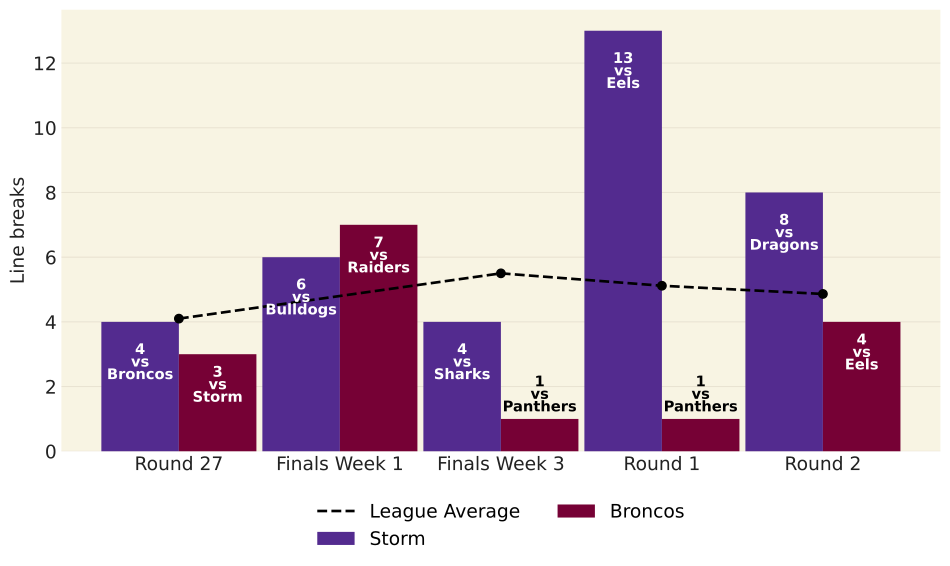
Storm’s recent attacking output dwarfs Brisbane’s.
The Storm return home as clear favourites at $1.70, with the Broncos drifting to $2.15 in a matchup that feels defined by Melbourne’s consistency against Brisbane’s volatility. The question is whether the market has already captured that gap or whether there is still value hiding in the numbers.
The best price for Storm is $1.74 with Sportsbet, offering 2.4% better return than the average market price. The best price for Broncos is $2.22 with BetFair, offering 3.1% better return than the average market price.
| Betting Agency | Storm | Broncos | Total | Line |
|---|---|---|---|---|
| Bet365 | $1.72 | $2.15 | 40.5 | 2.5 |
| Sportsbet | $1.74 | $2.10 | 41.5 | 2.5 |
| BoomBet | $1.72 | $2.12 | 41.5 | 2.5 |
| PointsBet | $1.67 | $2.20 | 41.5 | 2.5 |
| Dabble | $1.70 | $2.15 | 40.5 | 2.5 |
| Neds | $1.70 | $2.15 | 40.5 | 3.5 |
| BetR | $1.70 | $2.15 | 40.5 | 2.5 |
| PlayUp | $1.70 | $2.15 | 41.5 | 2.5 |
| BetRight | $1.70 | $2.15 | 40.5 | 2.5 |
| BetFair | $1.65 | $2.22 | 44.5 | 6.5 |
Melbourne arrive with a 1-0 record in 2026 and have been humming across their last five games. They have produced 32 points per game in that stretch while conceding just 17.2, a strong differential driven by control and pressure. Their line break output sits at 7 per game across that window, well above the league average of 4.8, and their completion rate of 80% is just above the league norm. The standout trend is their most recent two games where they exploded for 46 and 52 points, showing a clear upward spike in attacking output.
Storm’s recent attacking output dwarfs Brisbane’s.
Brisbane sit at 0-1 to start 2026 and their last five games tell a far more uneven story. They have scored 21.4 points per game while conceding 24.4, leaving them chasing games more often than controlling them. Their completion rate of 80% mirrors the league average, but their line break production is just 3.2 per game, well below the league benchmark and less than half of Melbourne’s recent output. The volatility is obvious with a 0-point outing in Round 1 2026 against Penrith standing out as a clear attacking collapse.
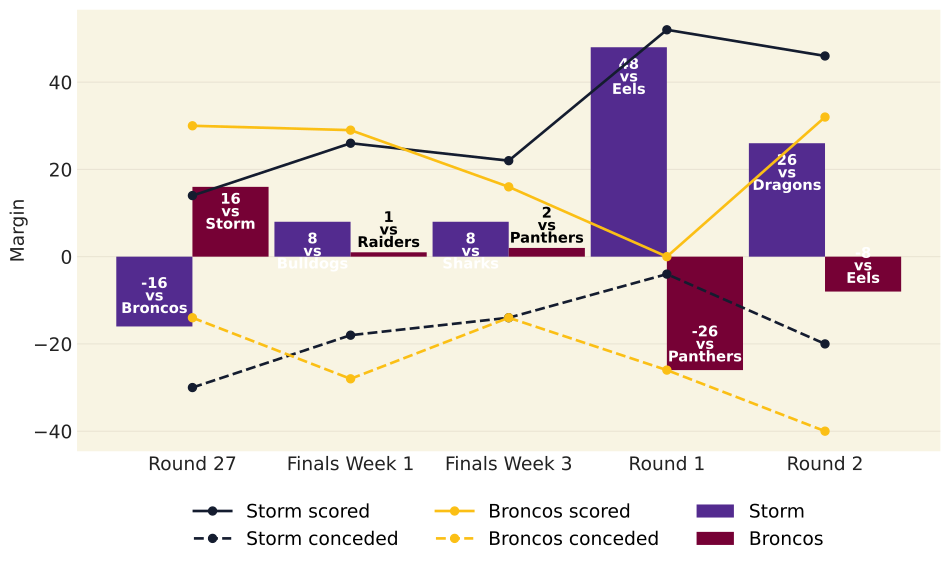
Margin combines scoring and defence into one number and anchors the recent form story.
Melbourne’s strengths are built on control and pressure. Their error count of 9.4 per game is nearly two fewer than the league average of 11, which keeps their sets clean and sustained. They also generate 1791.6 run metres per game across their last five, around 130 metres above the league average, which consistently puts opponents on the back foot. Their defensive effort shows up through 28.8 missed tackles per game, roughly six fewer than the league average and significantly tighter than Brisbane’s 33.2. That combination of discipline and yardage gives them a stable platform that rarely collapses.
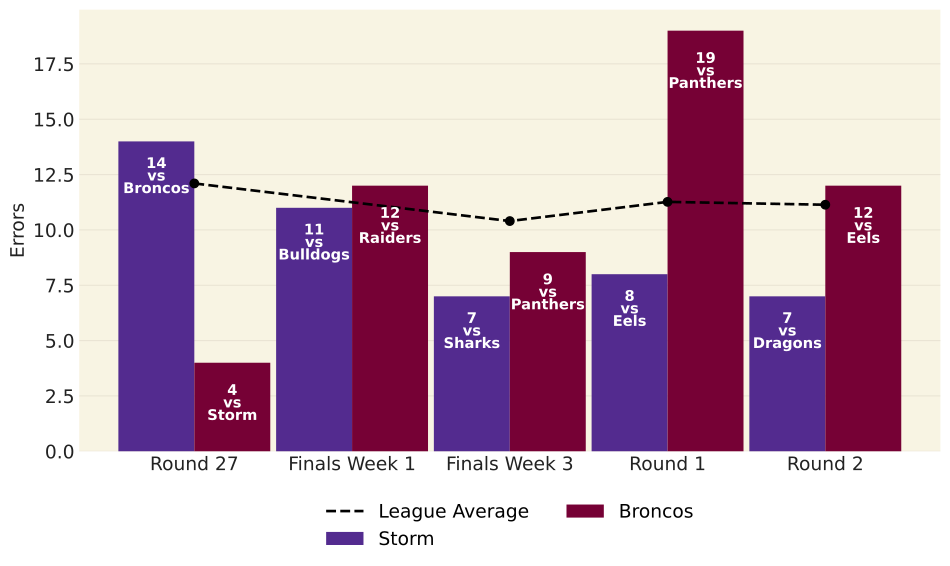
Melbourne’s discipline advantage underpins their control.
Brisbane’s weaknesses start with discipline and attacking pressure. They are conceding 8 penalties per game in their last five, which is nearly three more than the league average of 5.2 and gives opponents easy field position. Their line break rate of 3.2 per game is around 1.6 below the league norm and less than half of Melbourne’s 7, which explains their difficulty turning possession into points. They do generate opportunities with opposition errors sitting at 12.2 per game, slightly above the league average, but that is not translating into consistent attacking outcomes. Both teams are similar in completion rate and missed tackles, which largely cancels out in this matchup.
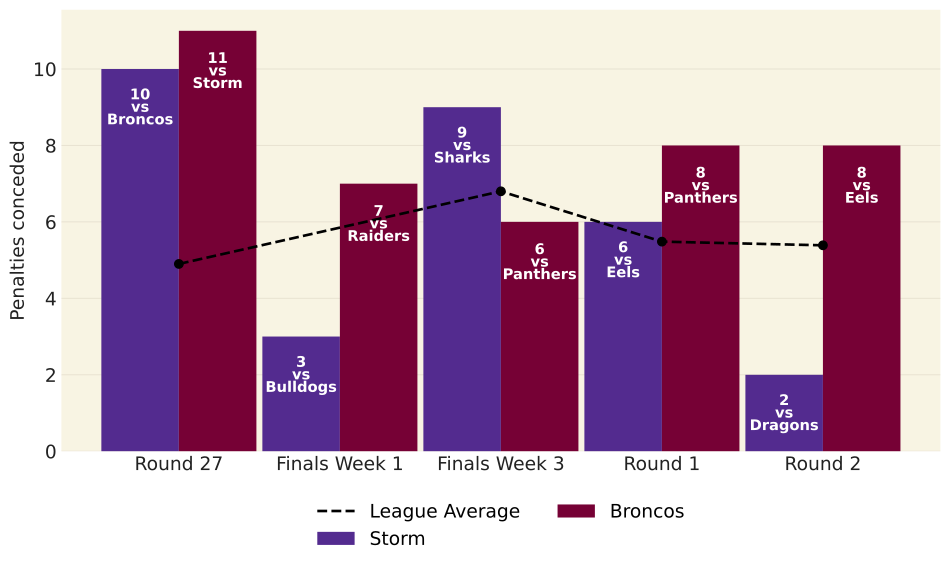
Brisbane are giving away too many cheap metres.
Cameron Munster remains central to Melbourne’s attack, producing 1.2 try assists per game across his last five matches and backing it up with 116.8 run metres per game. His ability to both create and carry gives Melbourne a dual threat on the left edge. Jahrome Hughes complements that with 0.8 try assists per game over his last five and added running threat with 73.8 metres per game, which keeps defensive lines guessing.
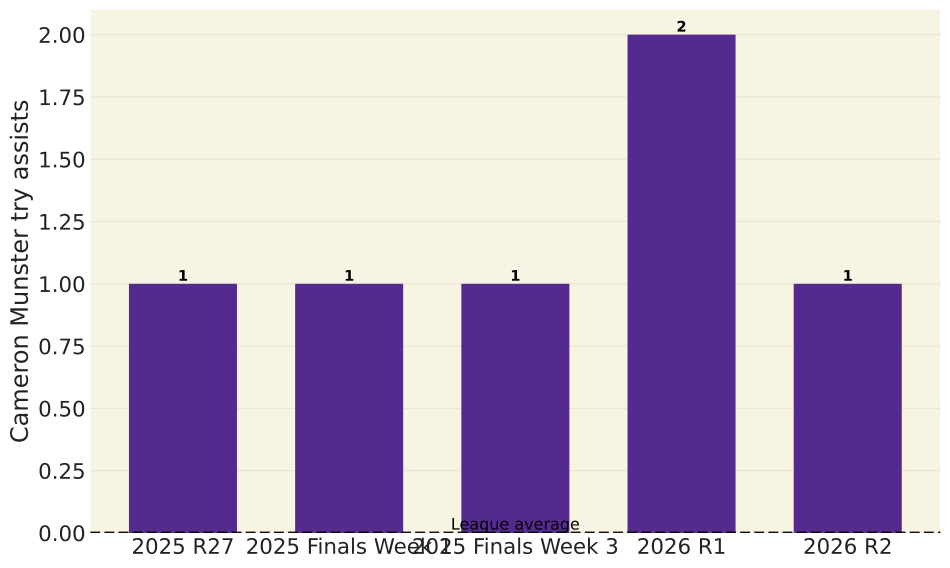
Munster’s playmaking output anchors Melbourne’s attack.
Harry Grant continues to be a key driver through the middle with 0.4 try assists per game over his last five and a heavy defensive workload of 47 tackles in his most recent match. Will Warbrick has also been productive out wide, posting 1 try per game across his last five and 1.2 line breaks per game, which highlights Melbourne’s ability to finish opportunities once they create them.
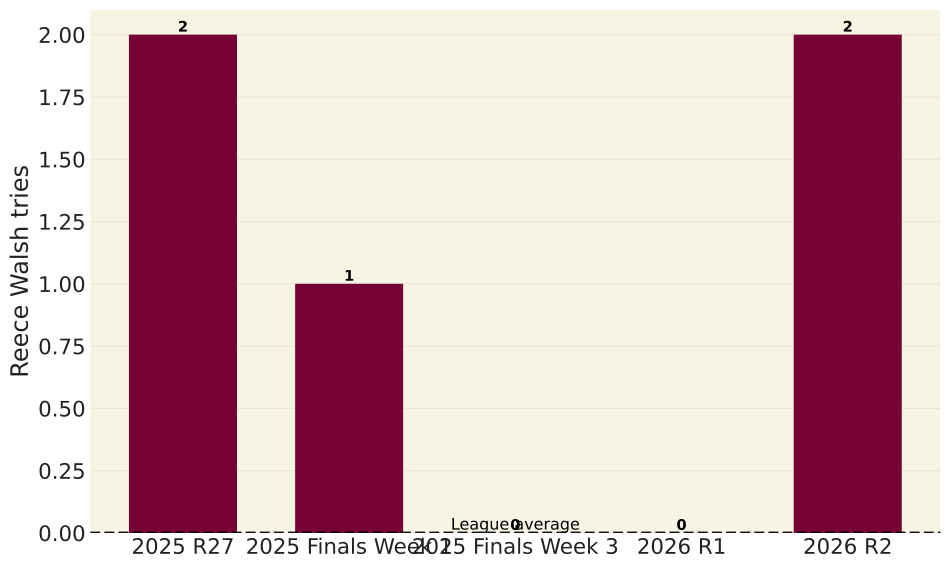
Walsh’s finishing ability is Brisbane’s biggest threat.
Reece Walsh is Brisbane’s most dangerous attacking weapon, scoring 2 tries in his most recent match and averaging 1 try per game across his last five. He also contributes 0.8 try assists per game in that window, showing he is involved in almost everything Brisbane create. Payne Haas provides the forward platform with 3.6 offloads per game across his last five, which is well above typical prop output and helps Brisbane generate second phase play.
Ezra Mam has been active as a playmaker with 0.2 try assists per game over his last five but is also carrying a defensive load with 2.4 missed tackles per game. Patrick Carrigan adds balance with 0.6 line break assists per game across his last five, but his 3.4 missed tackles per game shows the defensive pressure Brisbane’s middle has been under.
Melbourne are likely to control this game through possession and territory. Their ability to complete at 80% while keeping errors down to 9.4 per game allows them to build pressure and accumulate repeat sets. That pressure is amplified by their 7 line breaks per game, which forces defensive lines to compress and creates space on the edges. Brisbane will look to counter through offloads and second phase play, led by Haas and Walsh, but their lower line break output and higher penalty count means they often have to work harder for field position. If Melbourne win the yardage battle early, their attacking structure should eventually translate into scoreboard pressure.
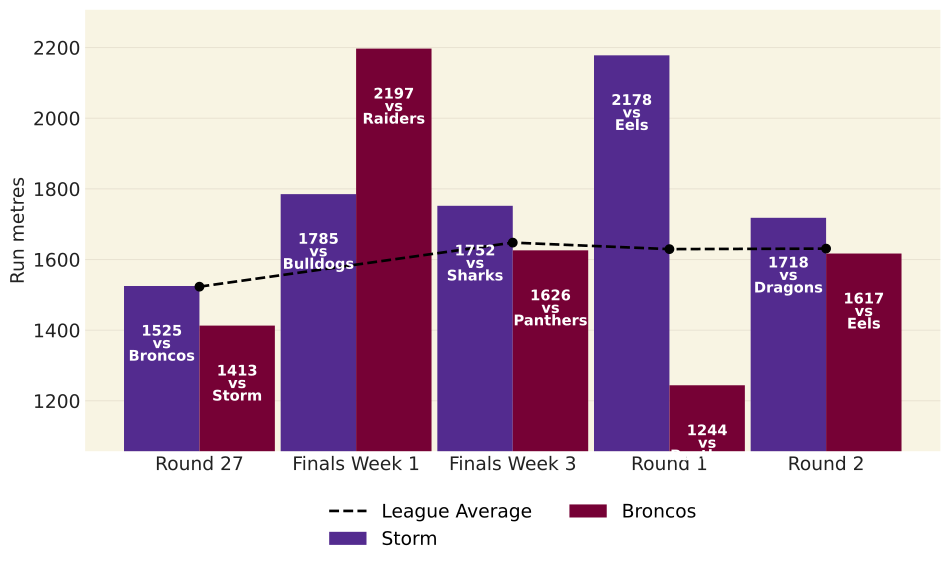
Melbourne’s yardage advantage drives territory and pressure.
The Storm deserve to be favourites and the gap between these sides looks justified by recent form. Melbourne’s combination of discipline, yardage and attacking output gives them a clear edge, and their implied probability at $1.70 sits at 58.8%. Based on the data, their true chances look closer to 65%, which suggests there is still some value in the favourite. Brisbane have the weapons to challenge if Walsh and Haas generate momentum, but their inconsistency and discipline issues reduce their chances of sustaining it. The tip is Storm to win and they look like a safe bet with additional cushion over the market price.